Wednesday, 13 November 2013

Risk factors of basel cell carcinoma skin cancer

This is not just the Most common cancer type of early skin cancer.  Early Skin cancer can advancement in anybody, not just individuals with these danger figures. In any case the examination could be a focal meander in making a cream that partners people go without getting early skin cancer. basel cell skin cancer is dangerous and its have many risk factors.
Elements that build your danger of basal cell carcinoma incorporate:
  • Chronic sun presentation: A considerable measure of time used in the sun — or in business tanning stalls — increments the danger of basal cell carcinoma. The risk is more excellent assuming that you live in a sunny or high-height atmosphere, both of which open you to additional UV radiation. The danger is additionally higher if the vast majority of your introduction happened soon after the age of 18. Your danger is more stupendous assuming that you have had no less than one rankling sunburn.
Types Of Most Common Cancer,Early Skin Cancer,Primary Liver Cancer,Most Common Cancer Types
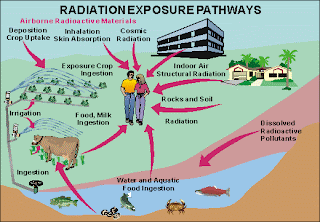
  • Exposure to radiation: Psoralen in addition to ultraviolet A (PUVA) medications for psoriasis might expand your danger of basal unit carcinoma and different types of skin tumor. Having experienced radiation medicines for youth skin inflammation or different conditions likewise might build your danger of basal cell carcinoma.
Types Of Most Common Cancer,Early Skin Cancer,Primary Liver Cancer,Most Common Cancer Types
  • Fair skin: In the event that you have exceptionally light skin or you spot or sunburn effectively, you're more inclined to improve skin disease than is somebody with a darker appearance. Basal unit carcinoma is uncommon in dark individuals.
Types Of Most Common Cancer,Early Skin Cancer,Primary Liver Cancer,Most Common Cancer Types
  • Your sex: Men are less averse to advance basal unit carcinoma than ladies are.
Types Of Most Common Cancer,Early Skin Cancer,Primary Liver Cancer,Most Common Cancer Types
  • Your age: In light of the fact that basal cell carcinomas regularly take decades to advance, the dominant part of basal unit carcinomas happen in individuals age 50 or more advanced in years.
Types Of Most Common Cancer,Early Skin Cancer,Primary Liver Cancer,Most Common Cancer Types
  •  A particular or family history of skin disease: In the event that you've had basal cell carcinoma one or increasingly times, you have a great risk of advancing it once more. In the event that you have a family history of skin disease, you might have an expanded danger of improving basal unit carcinoma.
Types Of Most Common Cancer,Early Skin Cancer,Primary Liver Cancer,Most Common Cancer Types
  • Immune-smothering medications: Taking meds that stifle your insusceptible framework, particularly after transplant surgery, essentially expands your danger of skin growth. Diseases in individuals with a debilitated insusceptible framework ordinarily are more combative than they are in overall sound individuals.
Types Of Most Common Cancer,Early Skin Cancer,Primary Liver Cancer,Most Common Cancer Types
  • Exposure to arsenic: Arsenic, a lethal metal that is discovered broadly in nature's turf, increments the danger of basal cell carcinoma and different tumors. Everybody has some arsenic introduction in light of the fact that it happens characteristically in the dirt, air and groundwater. In any case individuals who may be laid open to larger amounts of arsenic incorporate agriculturists, refinery laborers, and individuals who beverage debased well water or live close refining plants.
Types Of Most Common Cancer,Early Skin Cancer,Primary Liver Cancer,Most Common Cancer Types
  • Inherited syndromes that reason skin disease: Certain extraordinary hereditary infections build the danger of basal unit carcinoma. Nevoid basal cell carcinoma syndrome (Gorlin-Goltz syndrome) causes various basal unit carcinomas, and additionally setting on the hands and feet and spine aberrances. Xeroderma pigmentosum makes compelling affectability daylight and a high danger of skin tumor on the grounds that individuals with this condition have almost no capability.
Types Of Most Common Cancer,Early Skin Cancer,Primary Liver Cancer,Most Common Cancer Types

Basal cell carcinoma skin cancer warning signs

This is not only the Most common cancer type of early skin cancer. Early Skin cancer can development in anyone, not only people with these threat figures. In any case the examination could be a central wander in making a cream that helpers individuals go without getting early skin cancer.
The five warning signs of Basal cell carcinoma skin cancer. Habitually, two or a greater amount of these characteristics are available in one tumor. Also, Bcc at times takes after noncancerous skin conditions, for example psoriasis or dermatitis. Just a prepared doctor, for example an authority in sicknesses of the skin, can choose beyond any doubt. Assuming that you watch any of the cautioning signs or some other troubling change in your skin, counsel your doctor quickly.
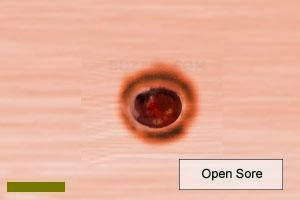
  • An open sore: An open sore that drains, overflows, or hulls and remains open for a couple of weeks, just to mend up and afterward drain once more. A diligent, non¬–healing sore is an exceptionally regular indication of an early Bcc.
Types Of Most Common Cancer,Early Skin Cancer,Primary Liver Cancer,Most Common Cancer Types
  • A scar like Area: A scar-like region that is white, yellow or waxy, and frequently has defectively characterized outskirts; the skin itself shows up gleaming and rigid.  This cautioning sign may demonstrate the vicinity of an obtrusive Bcc that is bigger.
Types Of Most Common Cancer,Early Skin Cancer,Primary Liver Cancer,Most Common Cancer Types


  • A pink development: A pink development with a somewhat raised moved outskirt and a crusted space in the focal point. As the development gradually amplifies, little guilt vessels might advance on the surface.


  • A sparkly knock or nudle: A gleaming knock or knob that is silvery or translucent and is frequently pink, red, or white. The knock can additionally be tan, dark, or tan, particularly in dim haired individuals, and might be befuddled with a mole.
Types Of Most Common Cancer,Early Skin Cancer,Primary Liver Cancer,Most Common Cancer Types


  • A ruddy fix or disturbed region: A rosy patch or bothered territory, habitually happening on the face, midsection, shoulders, arms, or legs. Once in a while the patch coverings, and it might additionally tingle. At different times, it continues with no perceptible uneasiness.
Types Of Most Common Cancer,Early Skin Cancer,Primary Liver Cancer,Most Common Cancer Types

Saturday, 9 November 2013

What are basal and squamous cell skin cancer


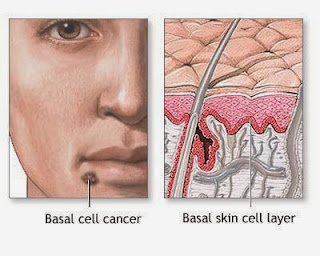
This is not just the Most common cancer type of early skin cancer, however the most common cancer type in people. Something like 8 out of 10 early skin cancer are basal unit carcinomas (likewise called basal cell cancers). They generally improve on sun-uncovered territories, particularly the head and neck. Basal cell carcinoma was once discovered almost fully in mid life or more advanced in year’s individuals. Right away it is likewise being seen in more youthful individuals, presumably in light of the fact that they are investing more of a chance out in the sun. The point when seen under a magnifying lens, basal unit carcinomas impart characteristics to the phones in the most minimal layer of the epidermis, called the basal cell layer.
Types Of Most Common Cancer,Early Skin Cancer,Primary Liver Cancer,Most Common Cancer Types

These cancers have a tendency to develop gradually. It is exceptionally extraordinary for a basal unit cancer to spread to close-by lymph hubs or to far off parts of the figure. Anyway if a basal cell cancer is left untreated, it can develop into adjacent territories and attack the skeletal substance or different tissues underneath the skin. After medication, basal unit carcinoma can repeat (return) in the same put on the skin. Individuals who have had basal cell cancers are likewise less averse to get new ones somewhere else on the skin. The same amount as 50% of the individuals who are diagnosed with one basal unit cancer will improve another early skin cancer inside 5 years. To comprehend basal and squamous cell skin cancers, it serves to ponder the ordinary structure and capacity of the skin.

Normal skin

The skin is the biggest organ in your physique. It does numerous distinctive things:

Types Of Most Common Cancer,Early Skin Cancer,Primary Liver Cancer,Most Common Cancer Types
  1. covers the inner organs and helps secure them from damage 
  2. serves as an obstruction to germs, for example microbes 
  3. prevents the misfortune of a lot of water and different liquids 
  4. helps control form temperature
  5. protects whatever is left of the form from ultraviolet (UV) flashes 
  6. helps the form make vitamin D 
Types Of Most Common Cancer,Early Skin Cancer,Primary Liver Cancer,Most Common Cancer Types
Epidermis
The top layer of skin is the epidermis. The epidermis is dainty, averaging just 0.2 millimeters thick (something like 1/100 of an inch). It ensures the deeper layers of skin and the organs of the from nature's turf. Keratinocytes are the primary cell sort of the epidermis. These phones make an imperative protein called keratin that helps the skin secure whatever remains of the form. The outermost part of the epidermis is known as the stratum corneum. It is made out of dead keratinocytes that are consistently shed as new ones shape. The phones in this layer are called squamous units as a result of their level shape. Living squamous cells are discovered just underneath the stratum corneum.

Types Of Most Common Cancer,Early Skin Cancer,Primary Liver Cancer,Most Common Cancer Types


These units have moved here from the most minimal part of the epidermis, the basal layer. The phones of the basal layer, called basal units, consistently partition to structure new keratinocytes. These supplant the more senior keratinocytes that wear off the skin's surface. Cells called melanocytes are likewise discovered in the epidermis. These skin cells make a tan shade called melanin. Melanin gives the skin its tan or tan color. It secures the deeper layers of the skin from a percentage of the destructive impacts of the sun. The point when skin is presented to the sun, melanocytes make a greater amount of the color, making the skin tan or obscure. The epidermis is divided from the deeper layers of skin by the wine cellar layer. This is an imperative structure in light of the fact that when an early skin cancer comes to be more progressed, it usually develops through this hindrance and into the deeper layers.
Types Of Most Common Cancer,Early Skin Cancer,Primary Liver Cancer,Most Common Cancer Types

Dermis
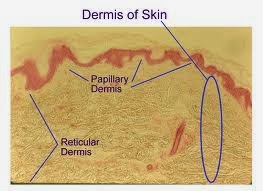
The center layer of the skin is known as the dermis. The dermis is much thicker than the epidermis. It holds hair follicles, sweat organs, veins, and nerves that are held set up by a protein called collagen. Collagen, made by cells called fibroblasts, gives the skin its flexibility and quality.

Types Of Most Common Cancer,Early Skin Cancer,Primary Liver Cancer,Most Common Cancer Types

Treatment of melanoma skin cancer

Early Skin cancer can advance in anybody, not just individuals with these danger figures. In any case the examination could be a paramount venture in making a moisturizer that aides people abstain from getting early skin cancer.

Surgical strategies move forward:

The foremost venture in medication is the evacuation of the melanoma, and the standard technique for doing this is by surgical extraction (removing it). Surgery has made incredible developments in the previous decade, and considerably less tissue is uprooted than was standard previously. Patients do all in all besides after the lesser surgery, which is simpler to endure and produces a more diminutive scar. Surgical extraction is additionally called resection, and the outskirts of the whole range extracted are reputed to be the edges. 


Types Of Most Common Cancer,Early Skin Cancer,Primary Liver Cancer,Most Common Cancer Types

Outpatients/office surgery

Much of the time, the surgery for flimsy melanomas could be carried out in the specialist's office or as an outpatient technique under nearby anesthesia. Fastens (sutures) stay set up for one to two weeks, and most patients are encouraged to stay away from overwhelming practice throughout this time. Scars are normally minor and enhance over the long run. Stains and ranges that are discouraged or raised taking after the surgery might be hidden with beautifying agents exceptionally figured to give disguise. Provided that the melanoma is bigger and requires more noteworthy surgery, an improved nonessential presence might be gotten with folds a product of skin close to the tumor, or with unions of skin taken from an alternate part of the figure. For joining, the skin is uprooted from ranges that are regularly or effectively secured with attire. There is currently a pattern towards performing sentinel hub biopsy and tumor evacuation surgery in the meantime, furnished the tumor is 1 mm or more thick. The point when the methods are joined together thusly, the patient is saved an additional visit.

Setting the edges:
In the new approach to surgery, substantially less of the ordinary skin around the tumor is uprooted and the edges, thusly, are much narrower than they at any point were some time recently. This extras noteworthy measures of tissue and diminishes the need for postoperative restorative reconstructive surgery. Most Us surgeons today accompany the guidelines prescribed by the National Institutes of Health and the American Academy of Dermatology Task Force on Cutaneous Melanoma.

Types Of Most Common Cancer,Early Skin Cancer,Primary Liver Cancer,Most Common Cancer Types

  • When there is an in situ melanoma, the surgeon extracts 0.5-1 centimeter of the ordinary skin encompassing the tumor and takes off the skin layers  down to the fat. 
  •  In evacuating an obtrusive melanoma that is 1 mm or less in Breslow's thickness, the edges of encompassing skin are expanded to 1 cm and the extraction experiences all skin layers and down to the sash (the layer of tissue blanket the muscles). 
  • If the melanoma is 1.01 to 2 mm thick, an edge of 1-2 cm is taken. 
  • If the melanoma is 2.01 mm thick or more stupendous, an edge of 2 cm is taken.
These edges all succumb to the reach of what is called "slender" extraction. When you consider that up to this point, edges of 3 to 5 cm (wide extraction) were standard, indeed, for similarly thin tumors, you can perceive how drastically surgery has improved. Doctors now realize that indeed, when melanomas have arrived at a thickness of 4 mm or additionally, expanding the edges past 2 cm does not expand survival.
Types Of Most Common Cancer,Early Skin Cancer,Primary Liver Cancer,Most Common Cancer Types

Micrographic surgery

As of late, Micrographic Surgery, which numerous doctors think about the best system for uprooting basal cell and squamous unit carcinomas (the two most normal skin diseases), is constantly progressively utilized as an elective to standard extraction for certain melanomas. In this system, one thin layer of tissue is uprooted at once, and as every layer is evacuated, its edges are mulled over under the magnifying instrument for the vicinity of tumor units. Assuming that the edges are disease free, the surgery is finished. If not, more tissue is evacuated, and this system is rehashed until the edges of the last tissue inspected are clear of tumor. Micrographic surgery accordingly can dispense with the mystery in the evacuation of skin diseases and pinpoint the malignancy's area when it is concealed to the bare eye. Micrographic surgery varies from different strategies since the minuscule examination of all extracted tissues throughout the surgery wipes out the need to "gauge" how far out or profound the bases of the skin tumor go. This permits the Micrographic surgeon to evacuate the greater part of the disease units while saving however much typical tissue as could reasonably be expected. Previously, Micrographic was once in a while picked for melanoma surgery for trepidation that some infinitesimal melanoma units could be missed and wind up metastasizing. Lately, nonetheless, exertions to enhance and refine the Micrographic surgeon's capacity to distinguish melanoma cells have brought about the improvement of extraordinary stains that highlight these units. These extraordinary stains are regarded as immunocytochemistry or immunohistochemistry (Ihc) stains and use substances that specially adhere to color units (melanocytes), where melanoma happens, making them much simpler to see with the magnifying instrument. Case in point, staining extracted solidified tissue areas with a melanoma antigen distinguished by T cells (Mart-1) successfully labels/locates the melanocytes, serving to home in on melanomas. The Mart-1-stained segments are handled and assessed for the vicinity of tumor in the edges; certain signs, for example homes of atypical melanocytes show that the edges are sure for melanoma and that further surgery must be carried out. Assuming that none of these signs are available, the surgery is finished up.